
Introduction:
Hospital underpads, also known as disposable bed pads or incontinence pads, are essential care products used in healthcare settings to provide optimal patient comfort and maintain hygiene. These versatile pads offer numerous benefits and play a crucial role in improving patient care and overall well-being. In this article, we will explore the features, uses, and advantages of hospital underpads.
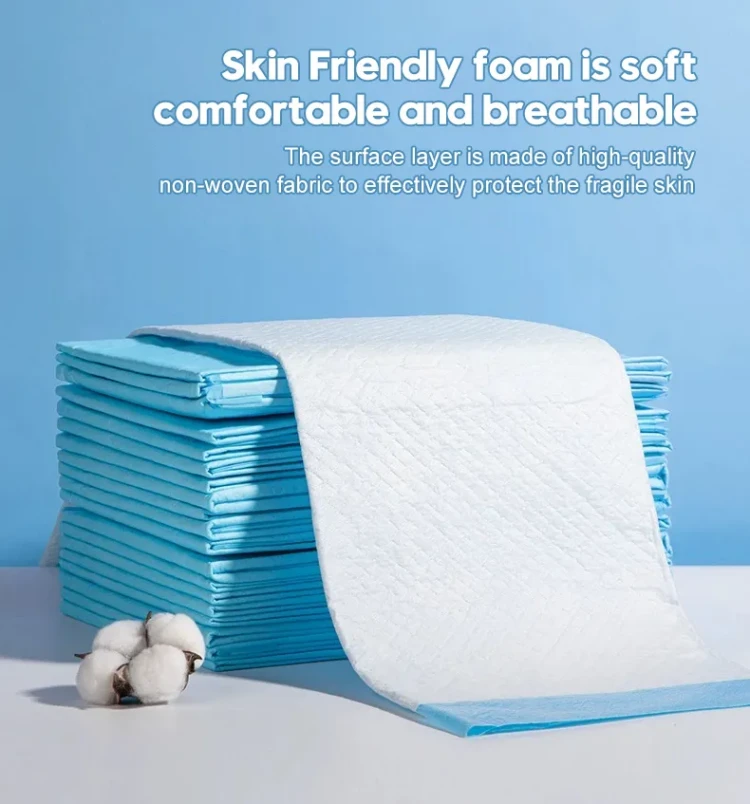
- Features of Hospital Underpads:
Hospital underpads are designed with specific features that make them suitable for medical environments. These features include:
a. Absorbency: Underpads have high absorbency capabilities to effectively manage and contain bodily fluids, such as urine or blood.
b. Waterproof backing: The bottom layer of underpads is made of a waterproof material that prevents leakage and protects the bed or mattress.
c. Soft and comfortable: The top layer of underpads is typically made of a soft, non-irritating material to ensure patient comfort and minimize skin irritation.
d. Non-slip backing: Many underpads come with a non-slip backing to keep them securely in place, reducing the risk of patient discomfort or injury. - Uses of Hospital Underpads:
Hospital underpads have a wide range of uses in healthcare settings, including:
a. Incontinence management: Underpads are commonly used to manage incontinence in patients who are unable to control their bladder or bowel movements. They provide a barrier between the patient’s body and the bed, preventing contamination and maintaining cleanliness.
b. Maternity care: Underpads are used during childbirth to protect the bed from amniotic fluid or blood. They offer a hygienic and comfortable surface for the mother during labor and delivery.
c. Post-operative care: Patients recovering from surgery often experience limited mobility or may have drainage from surgical sites. Underpads are used to absorb any discharge and protect the bed linens from contamination.
d. General patient care: Underpads can be used in various situations where patients may require additional comfort or protection, such as bedridden patients or those with limited mobility. - Advantages of Hospital Underpads:
Hospital underpads offer several advantages in healthcare settings:
a. Hygiene maintenance: Underpads provide a hygienic barrier that helps prevent the spread of infections and ensures a clean environment for patients.
b. Skin protection: The soft and absorbent material of underpads helps protect the patient’s skin from moisture-related skin conditions, such as pressure ulcers or rashes.
c. Cost-effective: Hospital underpads are typically disposable, making them a cost-effective option compared to reusable alternatives. They eliminate the need for laundering and reduce the risk of cross-contamination.
d. Time-saving: The use of underpads simplifies bed changes and cleanup, saving healthcare professionals valuable time and allowing them to focus on providing quality care.
Conclusion:
Hospital underpads are indispensable care products that contribute to patient comfort, hygiene, and overall well-being in healthcare settings. Their absorbent, waterproof, and comfortable design makes them an ideal choice for managing incontinence, post-operative care, maternity care, and general patient care. By providing a hygienic and protective barrier, underpads play a vital role in maintaining cleanliness, preventing infections, and promoting faster recovery.